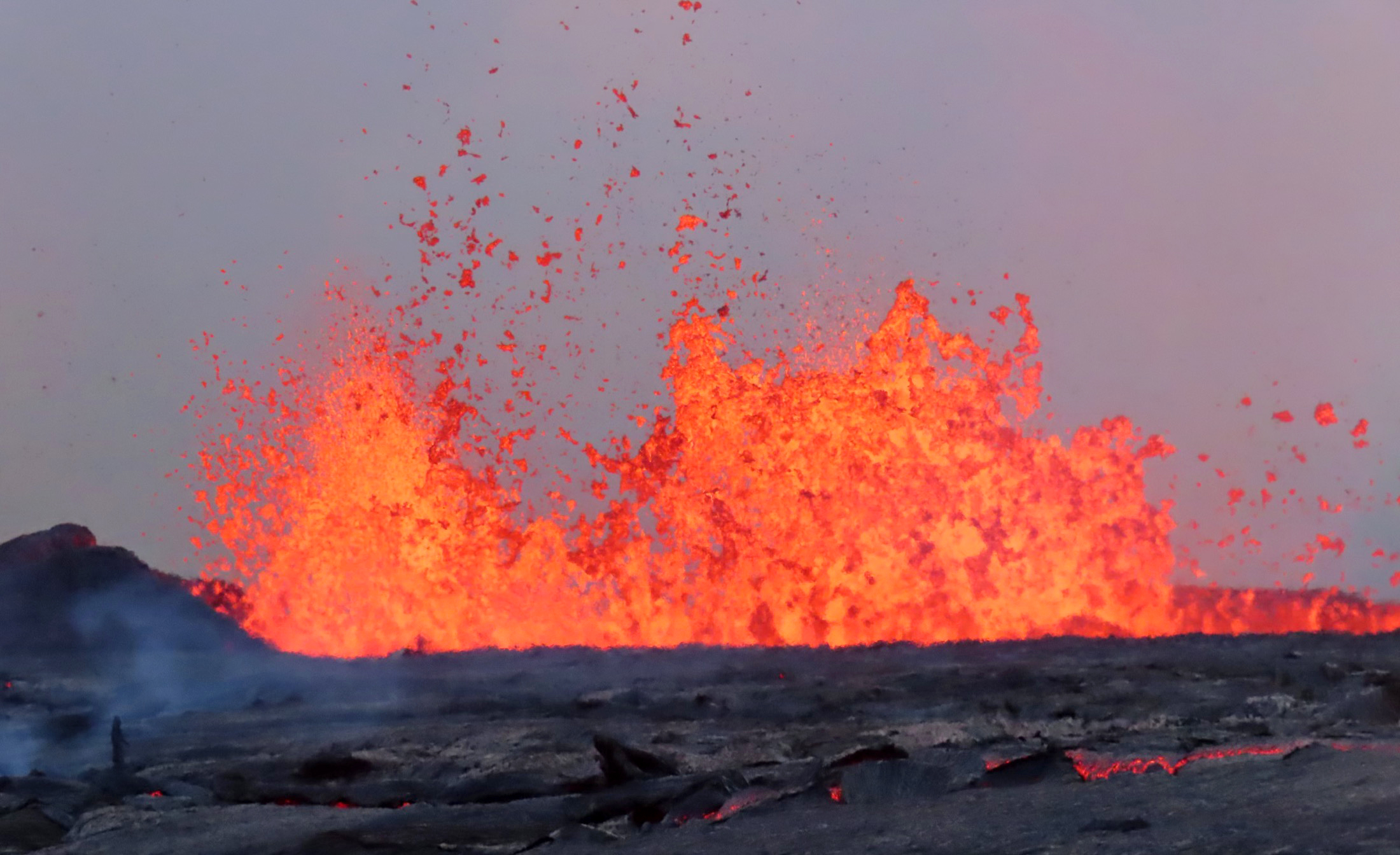
A whirlwind swirled near a lava fountain at the Kilauea volcano on Sunday and struck a livestream camera, sending debris toward the lens [1, 2].
The event provides a rare visual record of how extreme heat and atmospheric conditions interact during volcanic eruptions. Such phenomena illustrate the volatile environment surrounding active craters and the risks posed to monitoring equipment.
Scientists from the U.S. Geological Survey said the event was a whirlwind. The phenomenon, which some describe as a "Tephra Devil," occurred during a lava fountain episode [1, 2]. There is a discrepancy in reports regarding the specific sequence of the eruption; the USGS identified it as the 49th eruptive episode [1], while other reports cited it as the 47th [2].
According to the USGS, these whirlwinds are not typical tornadoes but are driven by localized thermal energy. The agency said whirlwinds form "in the presence of heat, which causes upward air flow, and strong windshear" [1]. This combination of intense heat from the lava and shifting wind patterns creates the rotating column of air and ash.
The footage captured by the livestream crew shows the whirlwind moving toward the camera before the impact of debris obscured the view [1]. The interaction highlights the intersection of volcanic activity and immediate meteorological changes, creating micro-climates within the crater area [1, 2].
USGS scientists continue to monitor the volcano's activity to understand the frequency of these atmospheric events. The recording of the Tephra Devil allows researchers to better analyze the dynamics of air flow during eruptive episodes [1].
“Whirlwinds form "in the presence of heat, which causes upward air flow, and strong windshear."”
The occurrence of a Tephra Devil demonstrates the capacity of volcanic eruptions to generate their own localized weather systems. By analyzing the interaction between lava-driven heat and wind shear, scientists can better predict the behavior of ash plumes and debris, which is critical for the safety of both ground-based monitoring equipment and aviation in volcanic regions.


