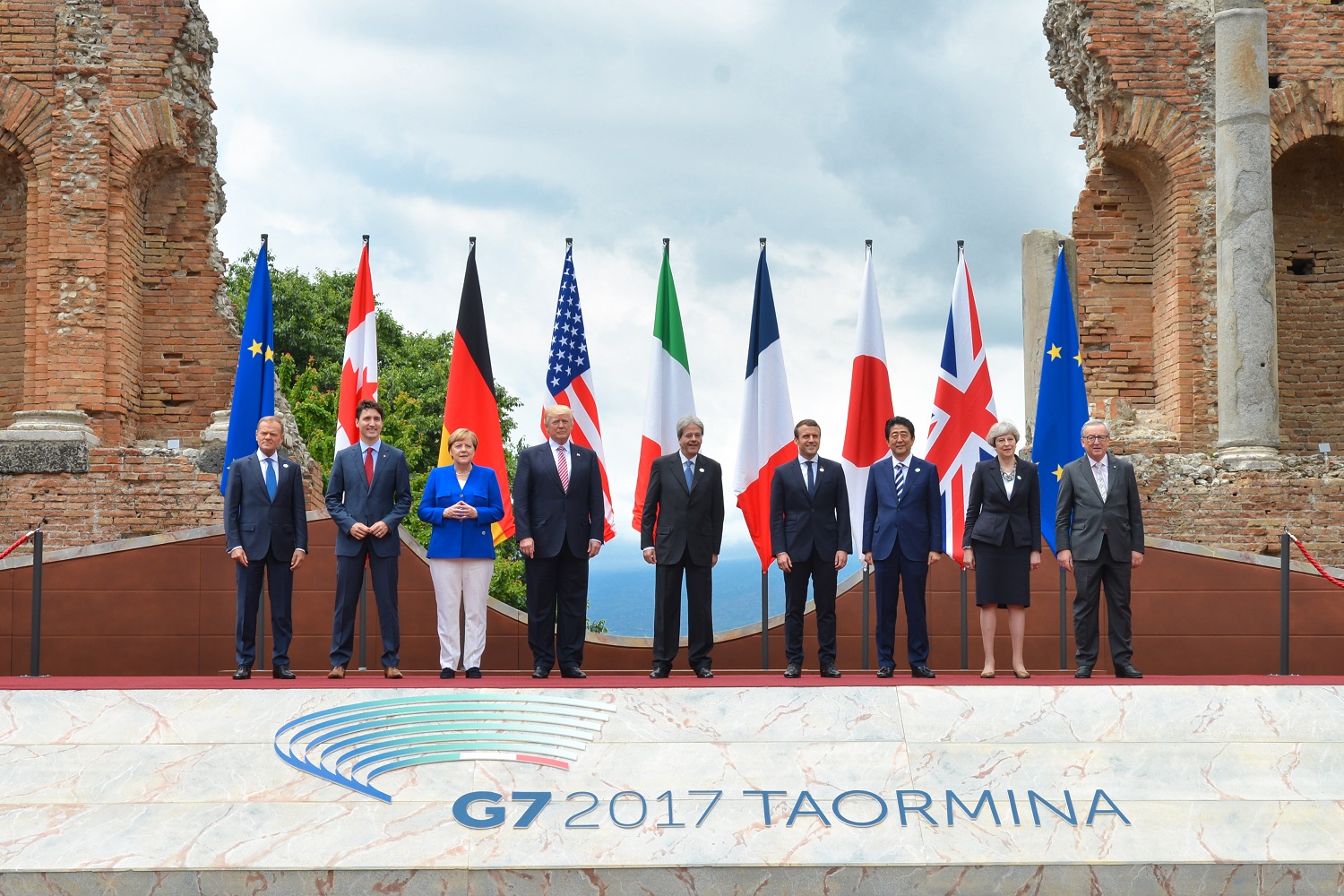
President Donald Trump announced a memorandum of understanding with Iran aimed at ending the Iran war during the G7 summit on Monday [2].
The announcement marks a high-stakes attempt to stabilize the Middle East through a combination of diplomatic frameworks and direct military threats. If the agreement fails, the U.S. may resume offensive operations, which could escalate regional tensions.
Speaking at the conference venue, Trump described the agreement as a memorandum of understanding [1]. He established a strict deadline for the deal to be finalized, saying that the U.S. would return to military action if the process is not completed within 60 days [1].
"It's a memorandum of understanding. If it doesn't get done in 60 days, that's alright. We go back to bombing," Trump said [1].
While the president described the arrangement as a memorandum, other reports indicated that Trump claimed the deal was "all signed" [2]. This discrepancy suggests the current agreement may be a preliminary framework rather than a finalized treaty.
The timing of the announcement coincided with broader regional volatility. Trump used the platform to promise "great things" for the Middle East [2]. However, the diplomatic push occurs as Iran issues warnings to Israel regarding strikes in Lebanon, and as Trump criticizes Israeli Prime Minister Benjamin Netanyahu [3].
The U.S. administration is positioning this 60-day window as a final opportunity for Iran to comply with the terms of the understanding [1]. The G7 summit served as the backdrop for this ultimatum, signaling that the U.S. expects international support for its pressure campaign.
“"If it doesn't get done in 60 days, that's alright. We go back to bombing."”
The use of a memorandum of understanding rather than a formal treaty indicates a transitional diplomatic phase. By pairing a 60-day deadline with the threat of renewed bombing, the U.S. is employing a 'maximum pressure' strategy to force a rapid conclusion to the conflict. The success of this deal depends on whether Iran views the threat as a credible deterrent or a provocation that justifies further military escalation.


