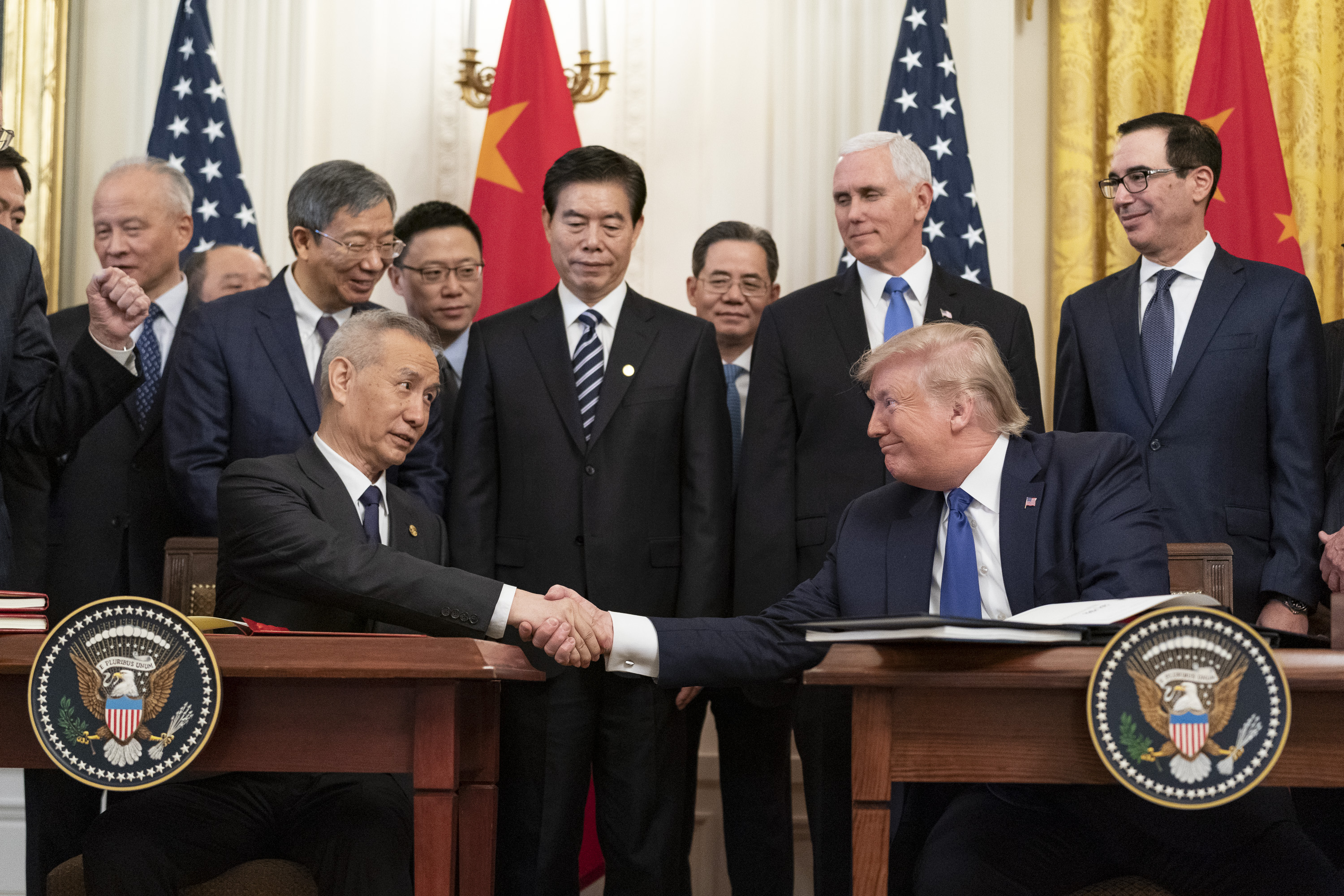
U.S. President Donald Trump and Iranian President Masoud Pezeshkian signed a memorandum of understanding on Wednesday, June 17, 2026, to end the war [1].
The agreement aims to stop months of conflict between the two nations and restore the flow of global shipping through the Strait of Hormuz [2]. This corridor is a critical chokepoint for international oil transit and global trade stability.
The 14-point agreement was executed remotely [3]. While reports on the physical nature of the signing varied, a White House official said the U.S. and Iran signed the memo of understanding remotely [4].
President Trump maintained a stern tone regarding the implementation of the deal. "If Iran's leaders don't behave, I could order new strikes," Trump said [5]. He previously indicated that the two sides were moving toward a resolution, stating, "We're getting a lot closer" [6].
The memorandum serves as a framework to cease hostilities, and ensure that navigation through the Strait of Hormuz is no longer obstructed [2]. The digital execution of the document allows both leaders to commit to the terms without a physical summit, reflecting the ongoing tensions and security concerns surrounding the conflict.
Officials have not yet released the full text of the 14 points, but the primary objectives remain the cessation of military engagement, and the restoration of maritime security [1], [3].
“"If Iran's leaders don't behave, I could order new strikes."”
The signing of this memorandum represents a diplomatic attempt to stabilize the Persian Gulf, a region where military escalation has threatened global energy markets. By prioritizing the reopening of the Strait of Hormuz, the U.S. and Iran are addressing the most immediate economic pressure point of the conflict, though President Trump's warning of future strikes suggests the peace remains conditional on Iranian compliance.


